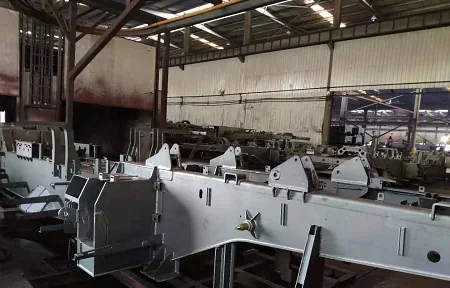
Replacement structure preparation
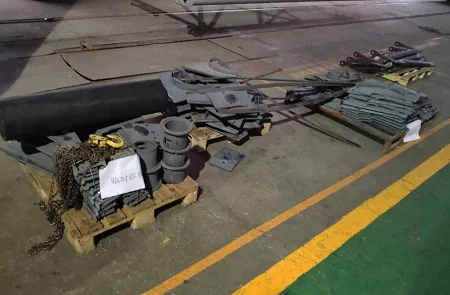
Fabricated sections were documented before they were connected to the existing equipment and blast wheel positions.
 Xindong AutomationShot blasting spare parts & wear parts
Documented project experience
Verified domestic project records involving blast wheel replacement, wear-part assessment, chamber liner work and equipment fitment review, supporting more accurate overseas spare-parts identification and RFQ preparation.

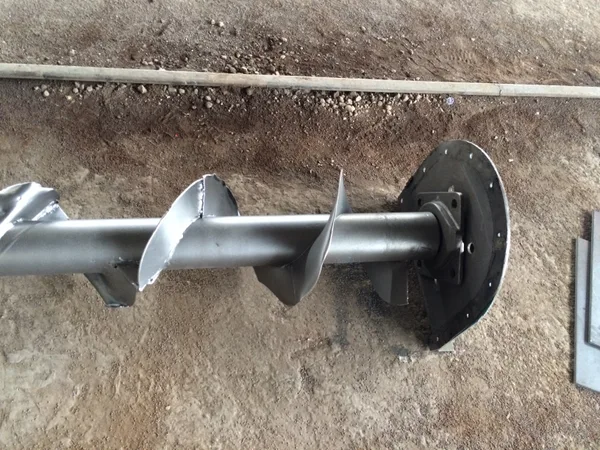
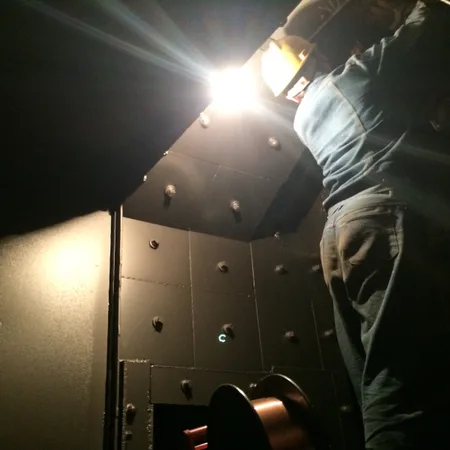
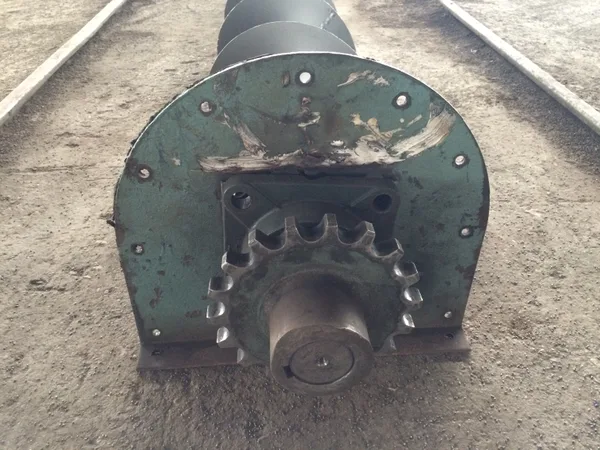
These verified domestic projects demonstrate practical experience with blast wheel assemblies, blades, control cages, impellers, wear plates, chamber liners and related installation positions. For overseas inquiries, this experience is applied to replacement-part identification, fitment review and RFQ preparation based on photos, drawings, dimensions, samples and equipment information.
Evidence scope
The value of these cases is equipment and component context. They support the website's primary focus on shot blasting machine spare parts rather than complete-machine sales or overseas project contracting.
Project photos connect the failed or worn area with the required replacement component.
Blast wheel assemblies, liners, wear plates, guard plates and related replacement positions are documented in equipment context.
Mounting faces, connection points and surrounding structures provide fitment evidence before quotation.
Overseas buyers can use the same evidence categories when sending models, photos, dimensions, drawings or samples.
Documented case 01
The domestic project record described a long-running system with damage across several operating sections.
The documented work included three complete blast wheel replacements and repair of thirteen additional blast wheels. Other recorded items included wear plates, abrasive drop pipes, the blast-media recovery and bucket-elevator system, chamber grating, sealing components and chamber doors.
The record distinguishes complete blast wheel assemblies, repair components, wear parts and chamber-protection components. It also documents the installation positions and surrounding structures used to define the replacement scope.
List each assembly or part separately with quantity, installation position, model information, photos, dimensions, drawings or a worn sample. This helps separate complete assemblies from repair and wear-protection items before quotation.
Documented case 02
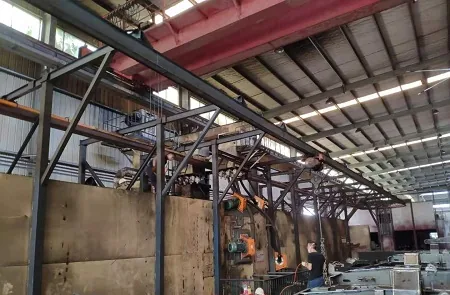
The published domestic case described an older chassis-frame shot blasting line requiring review of the existing machine and its blast wheel installation positions.
The team checked the original machine parameters, used three-dimensional review as part of the redesign process, redesigned the main blasting chamber and replaced twelve blast wheels.
The project documented blast wheel position, mounting arrangement, chamber geometry, abrasive path and the interface between new blast wheel parts and the existing structure.
Provide the blast wheel model, motor information, rotation direction, mounting face, connection dimensions, overall equipment photos, chamber drawings and worn-area close-ups for fitment review.
Model, motor information, rotation direction, mounting face and connection dimensions.
Overall photos, chamber area, liner layout, worn areas and available drawings.
Final compatibility is checked from the supplied evidence before quotation.
Fabricated sections were documented before they were connected to the existing equipment and blast wheel positions.
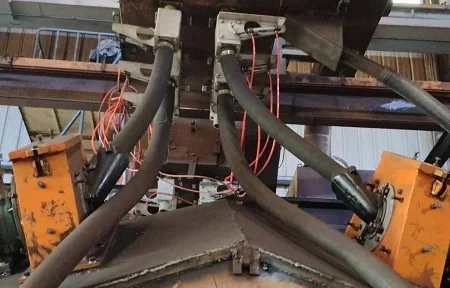
The photographs retain the wheel locations, surrounding structure and connection context used during fitment review.
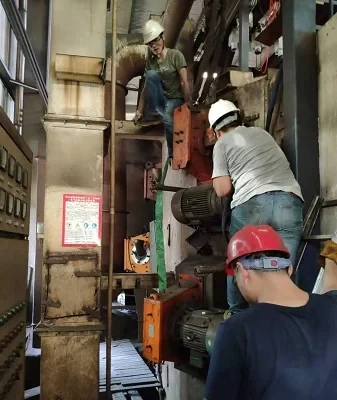
Close installation-position photography helps relate replacement components to the existing mounting arrangement.
Documented case 03
The domestic record covered a hook-type shot blasting machine with chamber wear, blast wheel replacement requirements and related maintenance context.
The record documented chamber-body replacement, internal steel lining, cast guard plates in the direct-blast zone and four G450 blast wheels rated at 15 kW. A magnetic separator and dust-collection maintenance were also part of the domestic project context.
The part-identification information includes blast wheel assemblies, chamber lining and cast guard plates in their installed locations. Any custom replacement part still requires verification from drawings, dimensions, photos or samples.
Identify each blast wheel, liner or guard plate separately and provide its installation position, dimensions, photos, drawing references, quantity and available model information before quotation.
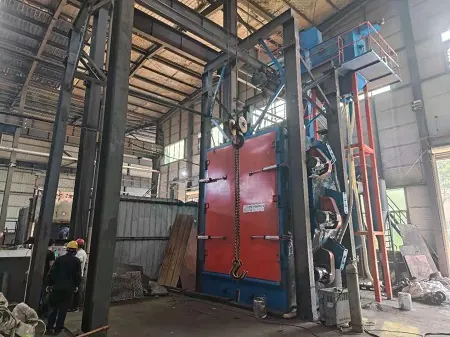
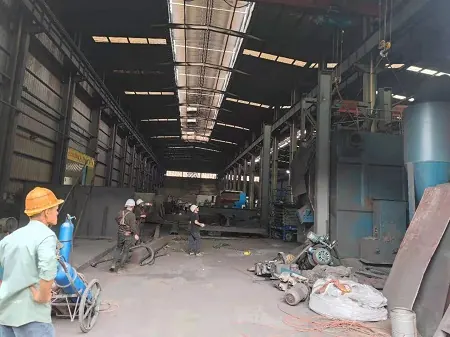
The wider work area records the machine position and surrounding structures before replacement work.
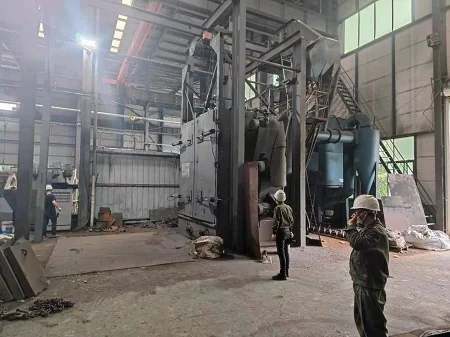
Equipment-side photographs help identify access, mounting relationships and the location of replacement parts.
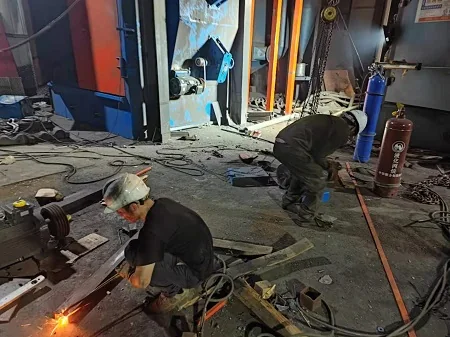
The project record shows how chamber protection and blast wheel component positions relate to the equipment body.
Documented case 04
The domestic archive records the original condition of another hook-type shot blasting machine project and the component preparation that followed.
The project archive includes drive and blast wheel components, fabricated replacement parts, work in progress and the documented post-completion condition.
The sequence connects the complete equipment view with replacement-part positions and prepared components. Buyers can compare related categories in the shot blasting spare-parts catalog.
Start with the complete machine and nameplate, then add close-ups of the worn part, mounting points, dimensions, removed sample and required quantity.
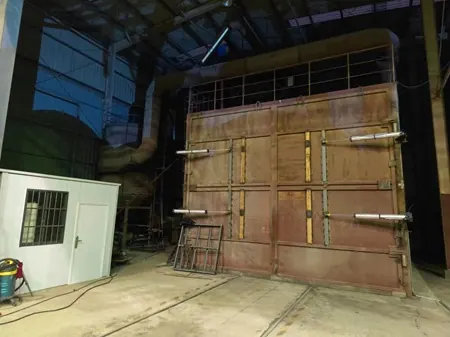
The machine structure and visible working areas were recorded before replacement-part preparation.
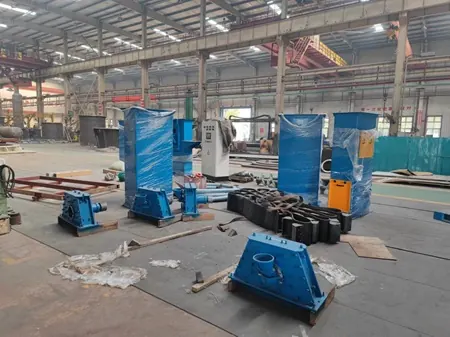
Fabricated parts and related assemblies were grouped and documented before installation.
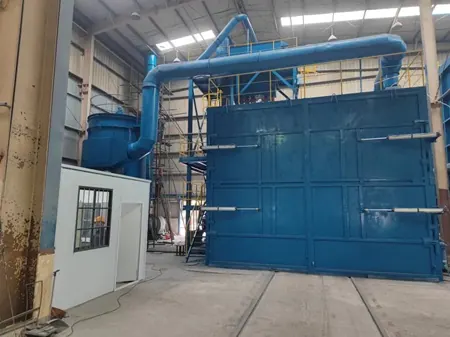
The post-completion photograph closes this domestic project record.
Documented case 05
The published domestic record described work on existing drill-pipe cleaning equipment.
The project added shot-peening capability to the existing drill-pipe cleaning equipment. Its objectives were to improve process consistency and repeatability, provide better process control, and enhance the fatigue performance of the drill pipes. No numerical performance improvement is claimed on this page.
The equipment structure and installation positions show why a process requirement must be connected to the correct replacement-part location and fitment relationship.
State the existing equipment condition and required process function, then provide machine-layout photos, installation positions, dimensions, drawings and available part numbers for review.
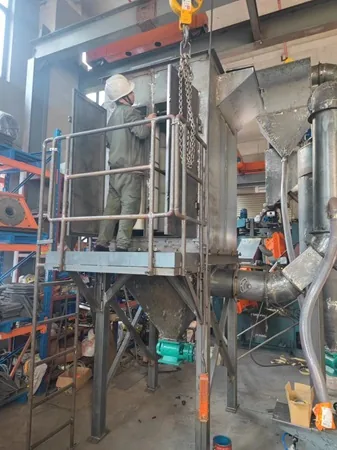
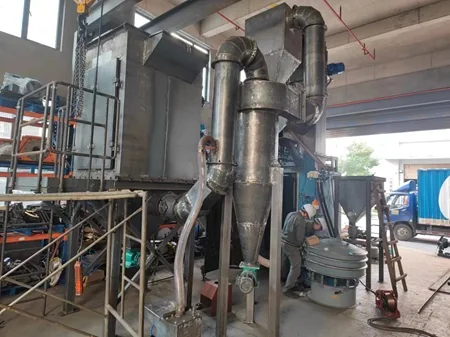
The wider view records the chamber, connected ducting and surrounding installation context.
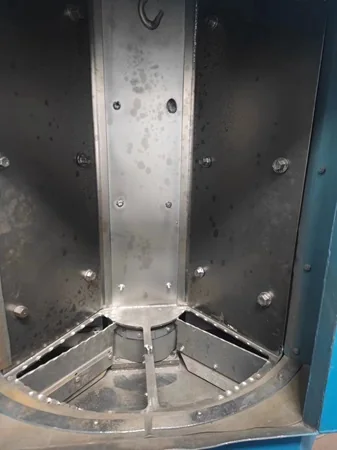
Interior photography provides evidence of chamber geometry, mounting surfaces and part positions.
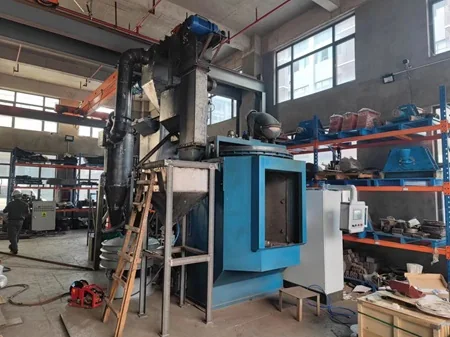
Access and component relationships were recorded while the shot-peening capability work was underway.
Documented case 06
The project involved hanger-type shot blasting equipment in a through-feed arrangement. The available project record does not specify the exact conveyor configuration.
The verified record states that 16 newly designed blast wheels were replaced, installation slots were remade and repositioned, blast wheel angles were adjusted, and manganese-steel chamber guard plates were replaced.
The record shows blast wheel assemblies and chamber guard plates in their installed locations, including mounting, orientation and surrounding structure.
Provide the blast wheel model and angle, mounting-slot dimensions, chamber position, guard-plate dimensions, hole pattern, quantity, installed photographs and a removed sample where possible.
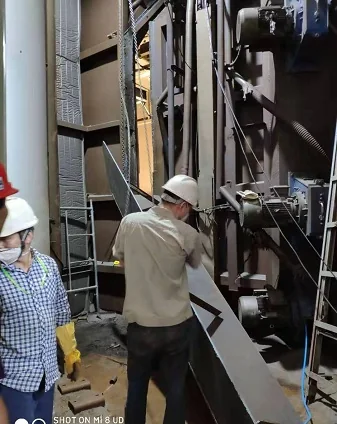
The project record shows the access available around the blast wheel and chamber-protection area.
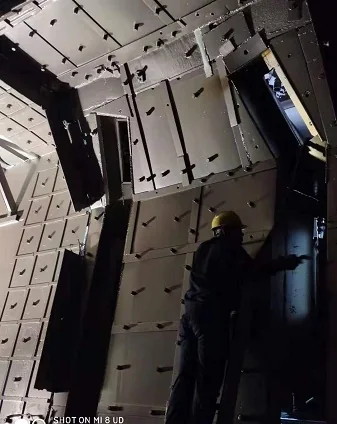
The fitted plates and chamber surfaces provide reference for shape, orientation and installed location.
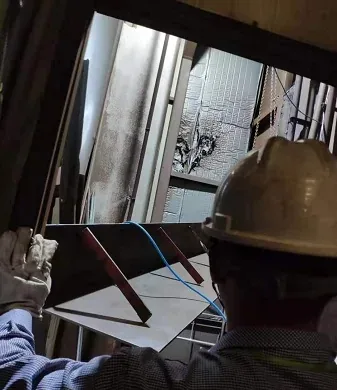
Close-up project photography records the relationship between the replacement plate and surrounding structure.
Project scope
These domestic records support replacement-part identification, fitment review and RFQ preparation. Overseas supply scope is confirmed separately in each quotation.
Part identification, fitment review, quotation, inspection requirements, packing and shipment preparation.
Models, photos, previous part numbers, dimensions, drawings, samples, quantities and destination.
The page documents domestic experience; it does not offer overseas installation or retrofit contracting.
REPLACEMENT-PARTS INQUIRY
Send part photos, drawings, dimensions, equipment information and required quantities for replacement-part identification and RFQ review.